FIELD COMPASS · FLAGSHIP PROJECT

I needed a way forward. So I learned to build one.

How William’s experience of shelter, work, and housing barriers drove him to teach himself software development and systems architecture.

SUMMER 2025 · WHERE THIS STORY BEGAN

THE ORIGIN

It began in the summer of 2025.

William Lodge · Founder · Self-taught systems architect

What I was experiencing became the starting point for the work that would grow into Field Compass and Williams Compass. This marker dates the origin of the story and mission; it is not a software launch date or a nonprofit registration date.

My experience of homelessness shattered what I thought I understood about it. I kept working. I kept trying to move forward. Yet housing could still feel like another promise followed by another obstacle.

Shelter life could make work harder. Curfews conflicted with work schedules. Working could mean missing meals. I slept in a room with around 300 people, with little privacy, little quiet, and little time that belonged to me. At times, I felt scrutinized for working and for asking questions.

Too often, I felt seen as a number to process or a problem to manage. I wanted to be understood as an individual: someone with responsibilities, abilities, questions, and a future.

I was not willing to accept that a shelter would become my permanent home. I wanted a life beyond surviving the next day.
02 · LEARNING TO BUILD

Learning to build the system.

That determination pushed me to learn how to build. I taught myself software development and systems architecture because I wanted to change what I was experiencing. Building Field Compass meant learning how information, data, interfaces, and services fit together—and thinking about the person depending on all of them.

Field Compass is the flagship project through which I became a self-taught systems architect. It grew from a practical question: how can I make it easier for someone to understand their options and take their next step?

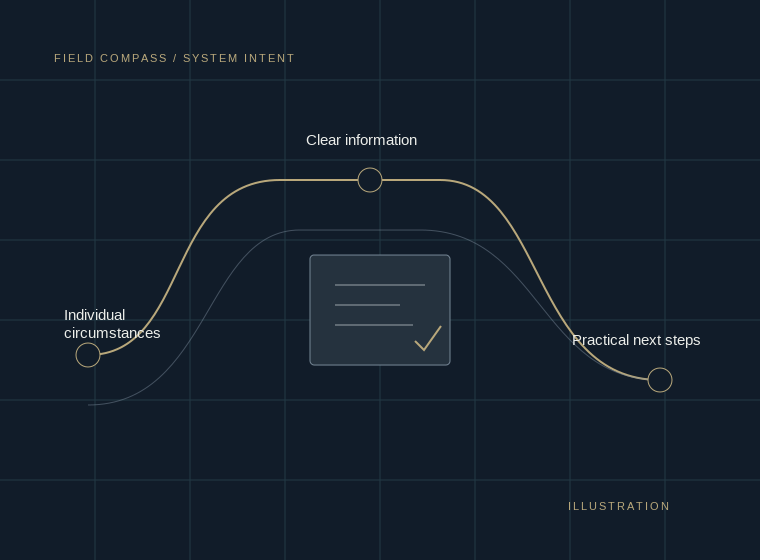
The barriers I encountered are why clear information, individual circumstances, and dignity matter so much in its design. These are motivations and design principles, not a promise that technology alone resolves a systemic barrier.

From lived experience to design intent.

  1. The personNot a number.
  2. The informationUnderstandable options.
  3. The realityReal schedules and barriers.
  4. The systemConnected pieces.
Conceptual system-intent diagram; not an application screenshot.

Conceptual system-intent diagram; not an application screenshot.

03 · AVAILABILITY

What is available today.

Field Compass is a separate, actively developed application. These capabilities were checked against the current public destinations.

Open Field Compass ↗

Live

Community resource navigation

Plain-language paths toward shelter, food, hygiene, health care, and other services.

Live

Guides from lived experience

Practical guidance written from firsthand experience navigating these systems.

Live

Voice and Spanish

The current public project describes voice and Spanish support.

Planned

iOS / App Store release

Funding-dependent; not presented as currently available.

04 · WILLIAMS COMPASS

One part of a wider mission.

Field Compass belongs to Technology & tools within Williams Compass. The organization also includes community resources, digital guidance, writing, research, and public accountability.

THE NEXT DIRECTION

Move the mission forward.

Support the work. Share knowledge. Build what comes next.

Get involved